
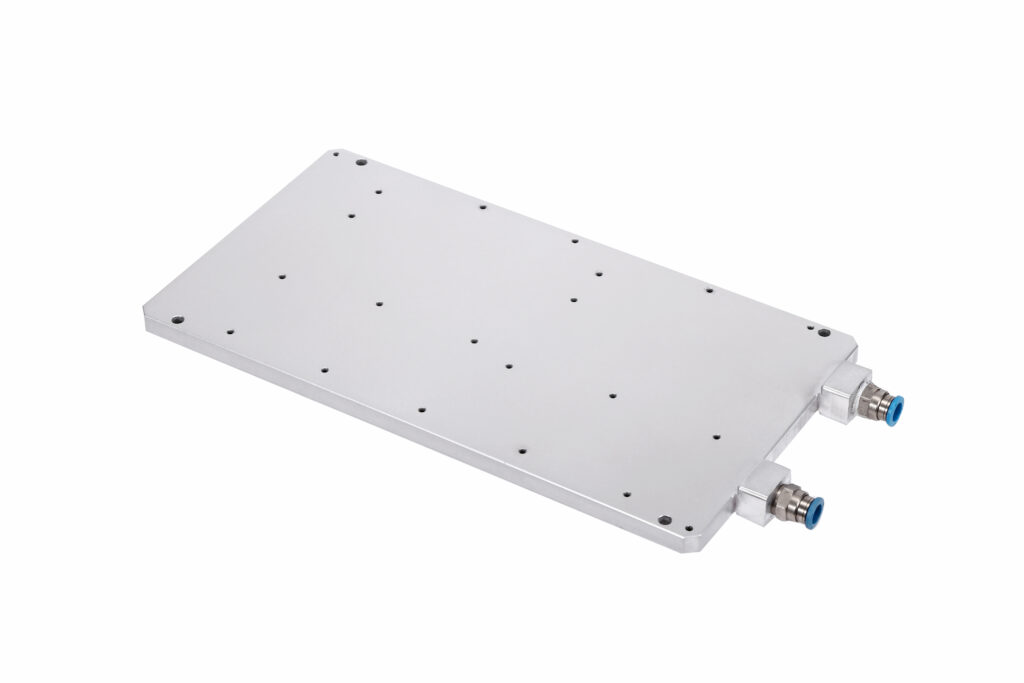
Custom Liquid Cold Plates Engineered for Your Thermal Requirements
From thermal design and CFD simulation to prototype validation and volume production, Pioneer Thermal (PT Heatsink) helps you develop liquid cold plates that balance cooling performance, pressure drop, reliability and manufacturability.
Thermal Design | CFD Simulation | DFM | Prototype | Testing | Volume Production | ISO 9001 | ISO 14001 | IATF 16949
Latest Project
Our Successful Liquid Cooling Plate Project
Pioneer Thermal provides custom liquid cold plate solutions from engineering to production. Whether you need a new design or already have manufacturing-ready drawings, our team supports you with CFD simulation, DFM, prototyping, validation and volume production.
Every solution is developed around your thermal requirements, pressure-drop targets, mechanical constraints and manufacturing needs—helping you achieve reliable cooling without unnecessary complexity or cost.


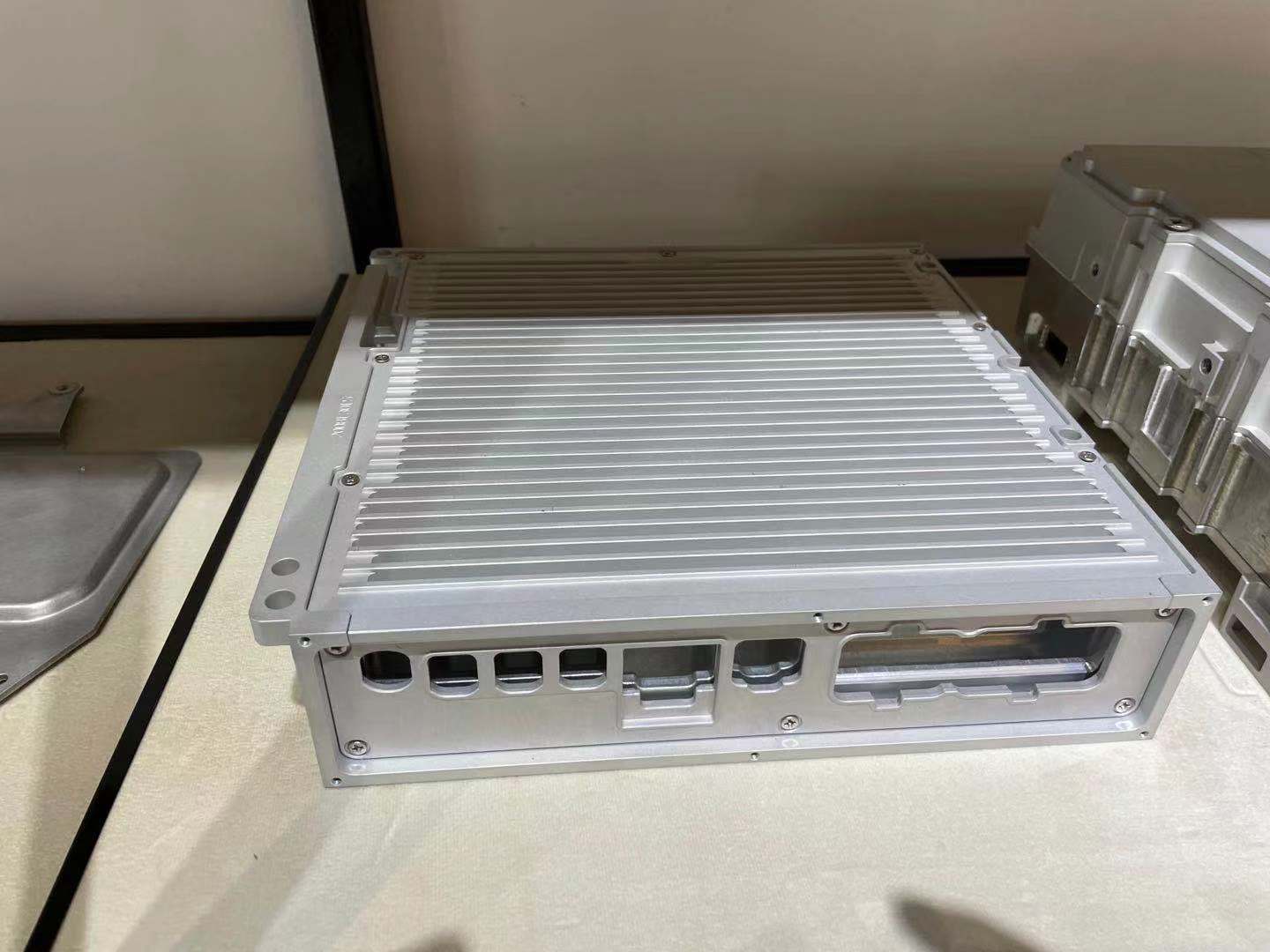


Cold Plate Engineering Case Study
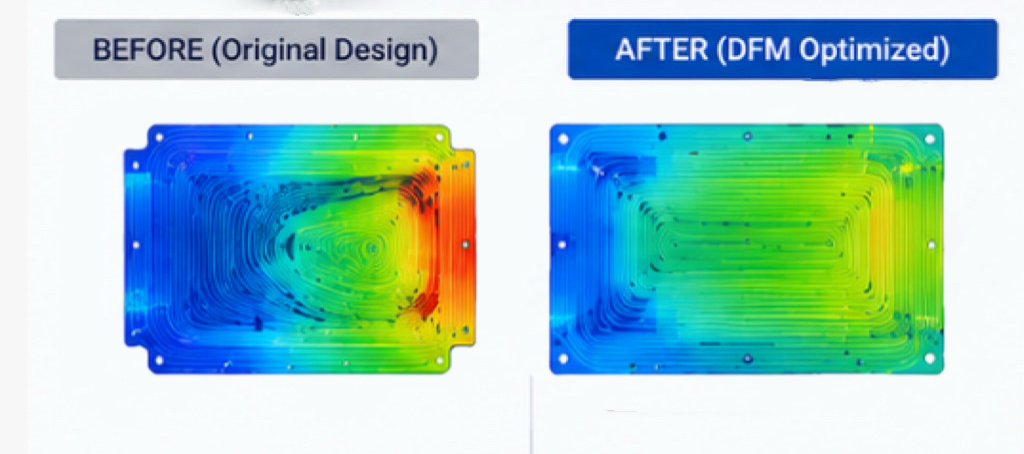
EV Battery Cooling
Temperature Difference
8.6°C → 3.2°C
63% Improvement
Challenge
During fast charging, the battery module showed uneven temperature distribution. Cells near the coolant outlet were running significantly hotter, while simply increasing the coolant flow would have increased pump demand.
Heat Load: 4.2 kW
Coolant Flow: 8 L/min
Initial Max. Temperature: 47.8°C
Initial Temperature Difference: 8.6°C
Pressure Drop: 32 kPa
Engineering Analysis
CFD analysis revealed uneven coolant distribution across the parallel channels. Several channels received significantly less flow, creating localized hot regions across the battery module.
What We Changed
- Redesigned the inlet and outlet manifolds
- Rebalanced parallel flow channels
- Adjusted channel width in low-flow regions
- Reduced unnecessary local flow resistance
Result
Max. Temperature
47.8°C → 41.5°C
↓ 6.3°C
Temperature Difference
8.6°C → 3.2°C
↓ 63%
Pressure Drop
32 kPa → 29 kPa
↓ 9%
Customer Value
The optimized cold plate achieved significantly more uniform battery cooling without increasing coolant flow or pump capacity, helping improve thermal stability while maintaining the existing cooling system architecture.
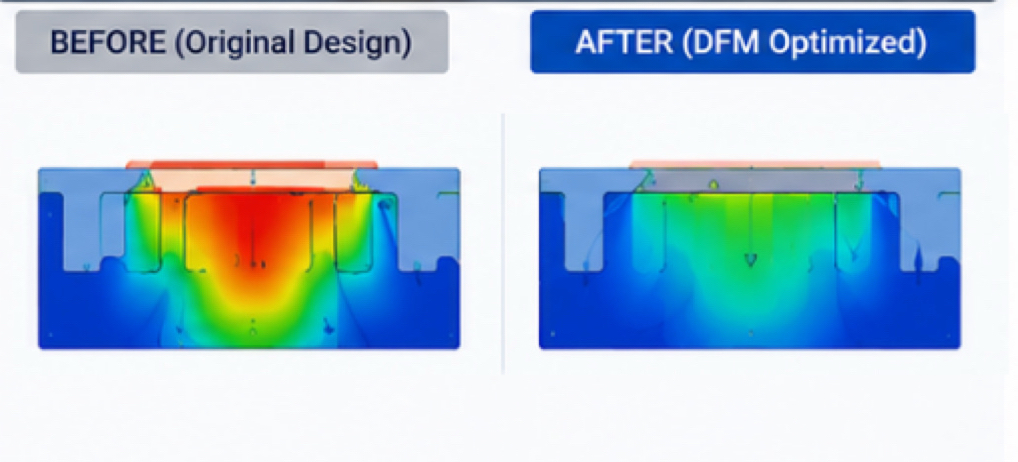
AI / GPU Cooling
Thermal Resistance
0.044 → 0.034°C/W
23% Reduction
Challenge
A high-power computing module required a compact liquid cold plate capable of removing more than 1 kW of heat while maintaining a strict device temperature limit. Increasing cold plate size was not possible because of packaging constraints.
Heat Load: 1,200 W
Coolant Inlet: 25°C
Flow Rate: 3.5 L/min
Initial Max. Device Temperature: 78.4°C
Initial Thermal Resistance: 0.044°C/W
Pressure Drop: 24 kPa
Engineering Analysis
CFD showed that the original channel layout did not provide sufficient coolant velocity beneath the highest heat-flux region. Part of the available coolant flow was being used in lower-load areas where additional cooling provided little benefit.
What We Changed
- Increased coolant interaction beneath the primary heat source
- Optimized local channel geometry
- Redistributed flow toward high heat-flux regions
- Improved heat spreading through the cold plate base
- Maintained the original mechanical envelope
Result
Max. Device Temperature
78.4°C → 66.1°C
↓ 12.3°C
Thermal Resistance
0.0445°C/W → 0.03425°C/W
↓ 23%
Pressure Drop
24 kPa → 26 kPa
Cold Plate Size
No increase
Customer Value
The redesigned cold plate delivered substantially better cooling within the same mechanical envelope. Instead of increasing cold plate size or coolant flow, cooling capacity was concentrated where the thermal load was highest.
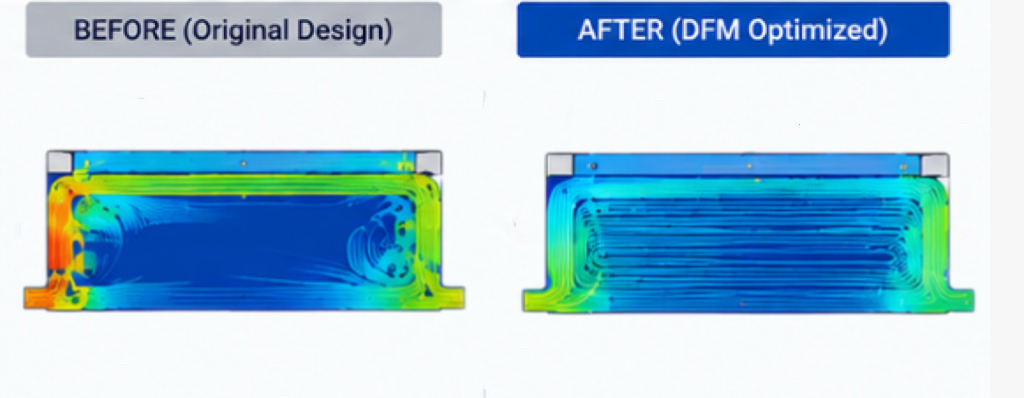
Power Electronics
Pressure Drop
46 → 27 kPa
41% Reduction
Challenge
An existing cold plate for a power electronics module met the temperature requirement, but its high pressure drop placed excessive demand on the coolant pump.
The customer wanted to reduce hydraulic resistance without increasing the cold plate footprint or compromising thermal performance.
Heat Load: 2.6 kW
Coolant Flow: 6 L/min
Max. Surface Temperature: 58.7°C
Pressure Drop: 46 kPa
Available Envelope: Fixed
Engineering Analysis
CFD identified excessive local resistance around multiple sharp turns and uneven flow distribution through the original serpentine channel.
The design was providing sufficient cooling—but at an unnecessary hydraulic cost.
What We Changed
- Reduced unnecessary channel turns
- Optimized channel width and transition geometry
- Redesigned the inlet manifold
- Balanced flow across parallel cooling paths
- Maintained the original mounting and interface locations
Result
Pressure Drop
46 kPa → 27 kPa
↓ 41%
Max. Surface Temperature
58.7°C → 59.4°C
+0.7°C
Coolant Flow
6 L/min → 6 L/min
Mechanical Envelope
Unchanged
Customer Value
Pressure drop was reduced by 41% while maintaining essentially the same thermal performance, reducing pump demand without requiring changes to the surrounding mechanical system.
We are committed to delivering expert thermal solutions for cooling plates. Request your free estimate today.
Start Your Cold Plate Project in 3 Simple Steps
Share Your Requirements
Send us your thermal requirements if you need a new design, or send your drawings and specifications if your design is ready for manufacturing.
Engineering Review
Our engineering team reviews your design, materials, manufacturing process, tolerances and project requirements, then works with you to identify the most practical solution.
Prototype to Production
Once the design is confirmed, we move from prototype and validation to volume production with controlled quality and consistent project support.
Engineered Around Your System — Not a Standard Cold Plate
Thermal Performance
We optimize the thermal path from the heat source to the coolant to help reduce peak temperature and improve temperature uniformity.
Flow Distribution
Channel and manifold designs are optimized to distribute coolant where it is needed while avoiding low-flow regions and unnecessary flow resistance.
Pressure Drop
We balance channel geometry, coolant velocity and flow path to achieve the required cooling performance without creating excessive pumping demand.
Mechanical Integration
Mounting locations, flatness, interfaces, fittings and packaging constraints are considered from the beginning of the design.
How We Work
One Cold Plate. Multiple Ways to Build It.
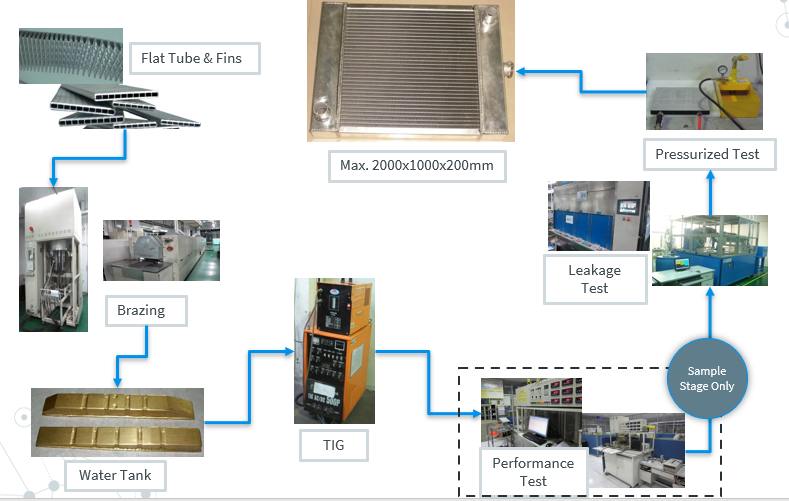
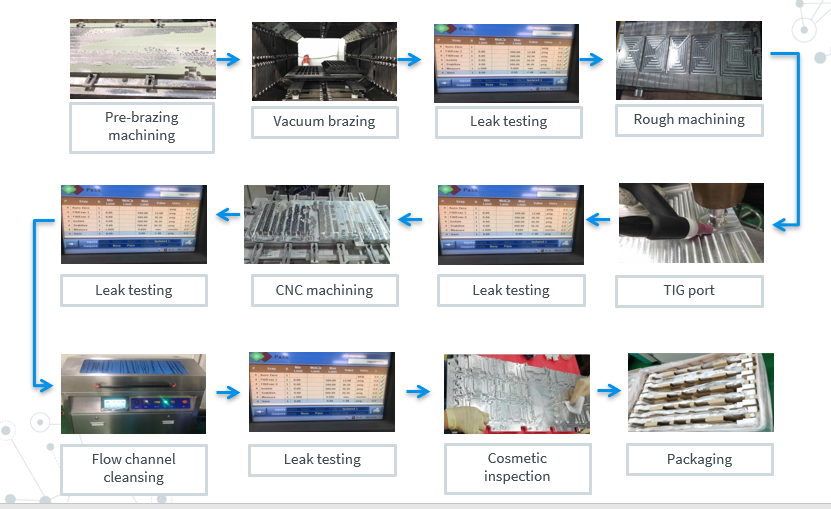
The right manufacturing process depends on thermal performance, pressure requirements, geometry, production volume and cost. We help you select the process that fits the application—not simply the process that is easiest to manufacture.
You can find our working process for different cold plate: Vacuum brazed liquid cold plate, Radiator cold plate, Tig/Atmosphere cold plate, Tube embedded cold plate, Friction Stir Welding (FSW) cold plate & Gun drill cold plate




Cooling Plate Technology Comparison
| Technology | Best For | Key Advantage | Consideration |
|---|---|---|---|
| Vacuum Brazing | Complex internal channels | High design freedom | Requires tight brazing control |
| FSW | High-reliability aluminum plates | Strong solid-state joint | Welding path must be DFM-ready |
| Embedded Tube | Moderate heat loads | Simple, cost-effective construction | Limited channel flexibility |
| Gun Drilled | Straight/high-pressure channels | Robust construction | Limited channel geometry |
| TIG / Welded | Prototypes & special structures | Flexible fabrication | Welding distortion must be controlled |
| Radiator Type | Large-area cooling | High surface area | Application-dependent structure |
Not sure which cooling plate technology fits for your project?
How We Inspect
Every Cold Plate Should Be Proven Before It ReachesYour System
Joint Integrity
- Water-immersion ultrasonic inspection
- Brazing / welding quality verification
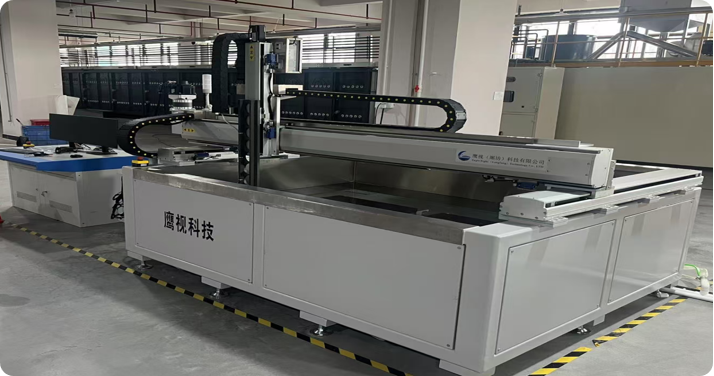
Leak & Pressure
- Helium leak testing
- High-pressure testing
- Pressure-hold testing
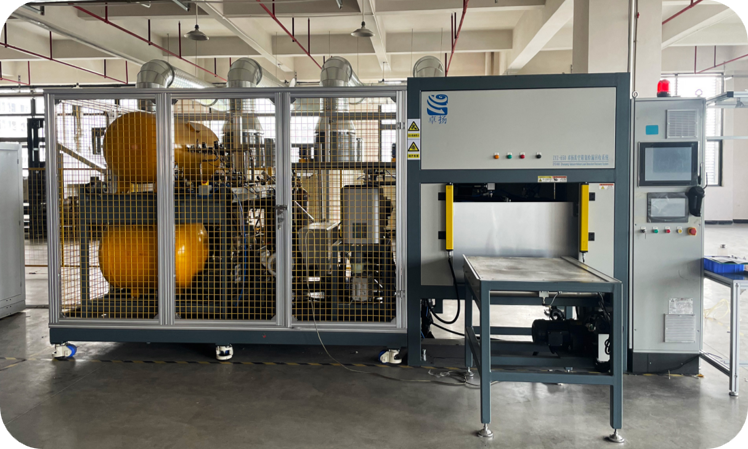
Thermal & Hydraulic
- Thermal performance testing
- Flow testing
- Pressure-drop testing
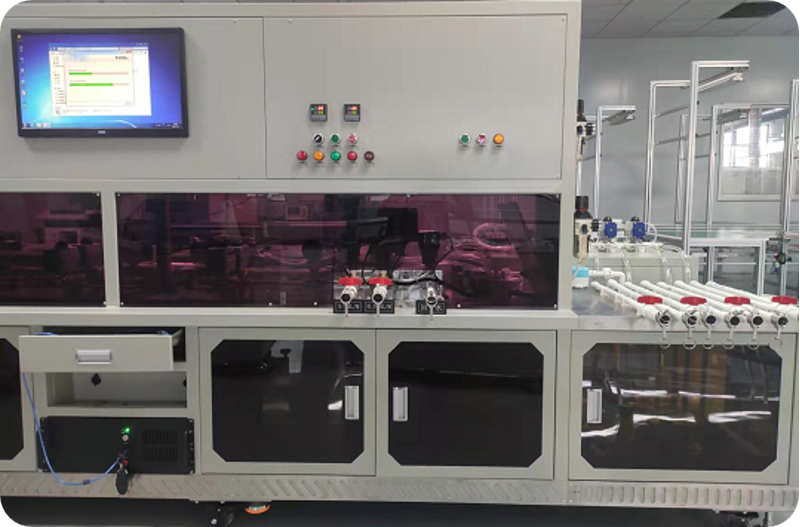
Cleanliness & Traceability
- Internal channel cleaning
- Vacuum drying
- QR-code traceability
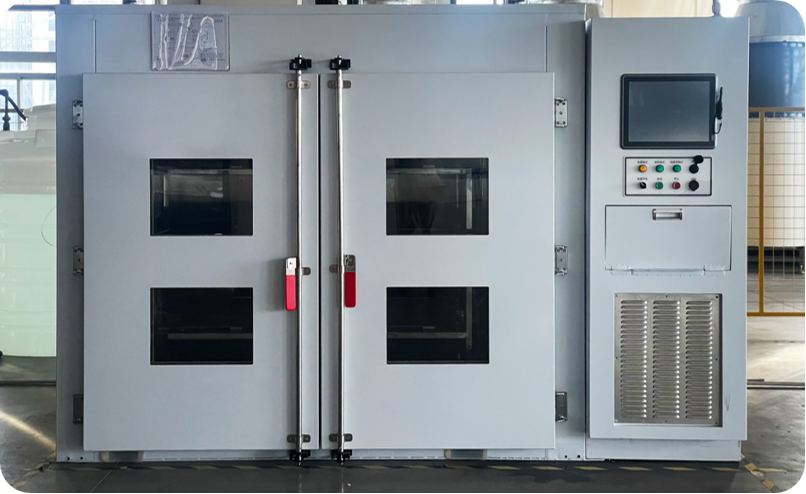
Testing plans can be customized according to your application and validation requirements.
More Than just a Heat Sink & Cooling Plate Manufacturer
Why Choose PT Heatsink?
Engineering Before Manufacturing
We evaluate thermal performance and manufacturability before committing to production.

Multiple Manufacturing Technologies
Vacuum brazing, FSW, embedded tube, gun drilling and welded constructions allow the process to fit the project.
Validation Capability
Thermal, hydraulic, leak, pressure and internal-quality verification help reduce production risk.
From Prototype to Volume
One engineering and manufacturing partner supports the project from initial concept through serial production.

FAQ
Frequently Ask Questions.
Yes. You don’t need to have a finished design before contacting us. Share your heat load, target temperature, available space, coolant conditions, flow rate and pressure-drop requirements, and our engineers can help develop a suitable cold plate concept.
Yes. If you already have a design, we can review the channel layout, flow distribution, pressure drop, thermal performance and manufacturability. CFD simulation and DFM review can be used to identify potential improvements before prototyping or production.
For a new design, the most useful information includes heat load, heat-source location, maximum allowable temperature, coolant type and inlet temperature, flow rate, pressure-drop limit, available space and mounting requirements.
If your design is already complete, simply send us your drawings, specifications and expected production volume for review.
It depends on your channel geometry, thermal requirements, operating pressure, material, production volume and cost target. We support processes including vacuum brazing, friction stir welding (FSW), embedded tube, gun drilling and welded constructions, and can recommend the most suitable option for your application.
The lowest temperature does not always mean the best cold plate. Our engineers evaluate channel geometry, coolant velocity, flow distribution and manifold design to achieve the required thermal performance while keeping pressure drop within your system limits.
Depending on the project requirements, cold plates can be validated through air leakage test, helium leak testing, pressure testing, flow and pressure-drop testing, thermal performance testing, internal cleaning and other inspection methods before shipment.
Yes. We support build-to-print projects from prototype through volume production. Before manufacturing, our engineers can also perform a DFM review to identify potential issues with materials, tolerances, joining methods, sealing and production cost.
Yes. We understand that cold plate designs and thermal data may contain confidential project information. An NDA can be signed before you share detailed drawings, CAD files or technical specifications.
Have a Cold Plate Project?
Whether you have complete drawings or only thermal requirements, our engineers can help evaluate the next step. We will contact you within 1 business day with:
- An engineer reviews your information.
- We identify missing thermal or manufacturing inputs.
- NDA support is available before detailed file review.
Our Value
Let’s solve the thermal challenges with expert
Seasoned Expert
Bachelor degree engineer team with 10+ years experience in heat sink industry, 3K+ design finished successfully.
Competitive Price
130,000 square feet primary facility to offer you the competitive price but quality thermal components.
Premium Support
Professional sales provide seamless communication
Checkout Our Blogs
Thermal Management for BESS: How Custom Heat Sinks Optimize Battery Energy Storage Systems
Heat is the hidden foe of all energy storage setups. In brief,

How Thermal Management Enhances EV Charging Station Performance?
The rise of Electric Vehicles (EVs) has put the emphasis on dependable

Thermal Management Challenges in AI Infrastructure and Heat Sink Innovations
“Thermal Management Challenges in AI Infrastructure and Heat Sink Innovations” represents the