
The rise of Electric Vehicles (EVs) has put the emphasis on dependable and efficient EV charging stations. We recognize that thermal management is one of the most critical factors that will contribute to optimal stations. Ensuring proper thermal management in EV charging stations keeps all components safe and effective in operation, with the prevention of overheating and minimizing energy loss. The Bloomberg New Energy Finance report estimates the global EV charging infrastructure market will grow substantially by 2030, further underscoring the importance of advanced cooling solutions.
In this blog, we’ll look at the benefits of using our thermal management solutions that help improve the performance of your EV charging station, as well as extend its lifespan and make the user more satisfied.
Why is Thermal Management Critical for EV Charging Stations?
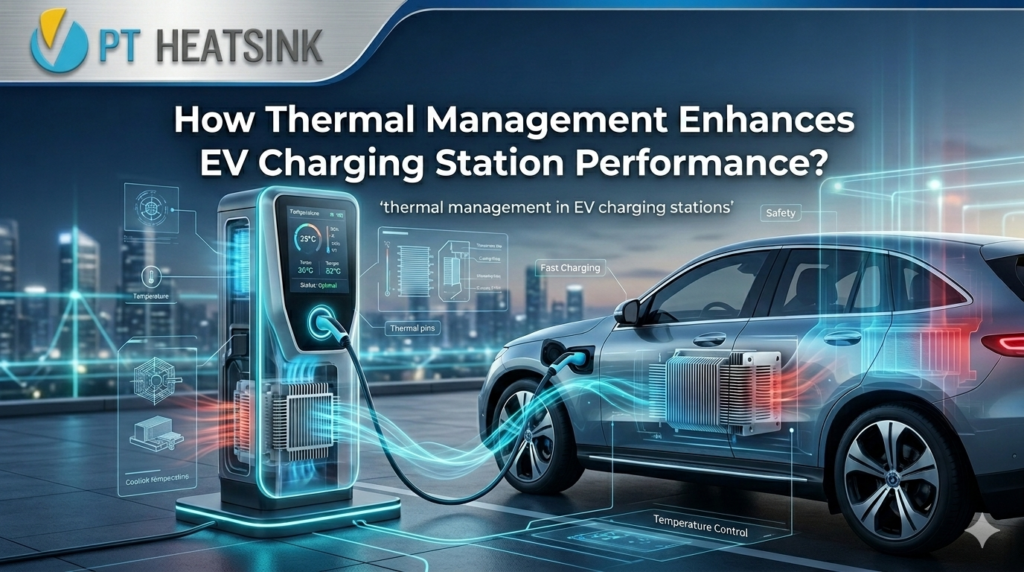
High-power electrical components such as converters, transformers, and cables can produce a significant amount of heat within the EV charging station. Without proper EV charger temperature control and advanced heat sink thermal management solutions, excessive heat can lead to system malfunctions, slower charging performance, reduced efficiency, or even permanent charger damage. Our high-performance heat sinks and cooling solutions are indispensable for maintaining optimal operating temperatures, improving energy efficiency, and ensuring the safe, reliable, and long-lasting operation of EV charging stations.
How Does Thermal Management Impact Charging Speed and Efficiency?
The heat is generated rapidly in fast charging. If the temperature does become too high, safety shutoffs or power reduction may result, slowing the charging process. With our EV charging station thermal management, your stations can charge at their full capacity without overheating, as you get faster charging speeds and better energy efficiency. This will lead to improved customer satisfaction and lower operating expenses for you.
What Are the Main Technologies Used in EV Charging Infrastructure Cooling Solutions?
We use several cutting-edge cooling technologies to ensure your EV stations operate cool:
Air Cooling: Cooling through fans or natural air movements.
Liquid Cooling: Fluid used to remove heat from parts.
Heat Sinks and Heat Pipes: Enhancing the removal of heat from critical components.
Active Cooling Systems: Using several systems together to get the best results.
Our EV charging infrastructure cooling solutions provide consistent performance all day long, even when everything is in use.
How Does EV Charging Station Thermal Management Improve Equipment Longevity?
The trick to longevity, in addition to repairing and replacing components, is keeping their temperatures correct, which is especially critical with power electronics and connectors. Overtemperatures cause wear and tear and can result in expensive repairs and downtime. We can assist you in your thermal management:
- Longer equipment life cycle and greater value realization.
- Minimize maintenance and replacement expenses.
- Minimize operational disruptions.
What are the Advantages of Good Temperature Control in EV Chargers?
Efficient temperature control will not only keep your stations operating smoothly, but also provide you with a couple of benefits:
- Better performance with faster charging rates.
- Improved user and operator safety.
- Reduced maintenance and repair costs.
- Improved customer experience through reliable and efficient services.
- Ability to scale for future high-power chargers.
What Are the Challenges in Implementing Thermal Management?
While EV charging station thermal management is a critical aspect to deliver, maneuvering this can be challenging:
- Lack of space for cooling systems.
- The cost of the initial advanced solutions is higher.
- Factors outside of the refrigerator that impact cooling efficiency.
- Increased energy consumption of coolers.
We take the time to work closely with you to clear these obstacles by choosing the appropriate cooling technology for your site’s specific needs.
Why Is EV Infrastructure Cooling Solutions Vital for Future Growth?
With increasing power demands and faster EVs, thermal control becomes increasingly important as EV charging moves toward more powerful and ultra-fast charging stations. Our cooling solutions help your stations stay cool and deliver higher performance when needed. They also play a role in consumption reduction and in compliance with safety requirements, thus putting your infrastructure on the course for success over the long run.
How Can Companies Optimize Thermal Management for Better Performance?
- A good thermal analysis should be carried out at the planning stage.
- Select cooling systems appropriate for your surroundings.
- Support is provided by frequent maintenance and upgrading of cooling parts.
- Use smart sensors for real-time temperature monitoring.
These practices will help make your EV stations efficient, safe, and future-proof.
Elevate Your EV Charging Infrastructure with Superior Thermal Management
Effective thermal management in EV charging stations is crucial for ensuring swift, dependable, and safe charging experiences. Our EV thermal management systems at charging stations and EV charger thermal management solutions assist you in several ways to help you save money, extend equipment longevity, and deliver a greater customer satisfaction experience. You have the opportunity to have a competitive edge on your competition as the demand for EV charging keeps increasing, with our advanced EV charging infrastructure cooling solutions.
Ready to upgrade your EV charging stations? PT heatsink is here to assist. Connect with us today and discover how our innovative thermal management solutions can optimize your infrastructure for a sustainable and efficient future.
FAQs
Q1. How does thermal management affect the charging speed of EV stations?
The direct impact of thermal management is to prevent overheating of electronic components that affects charging speed. Safe temperature limits allow chargers to input power at higher levels without incurring damage issues, resulting in quicker charging times. If the system isn’t sufficiently cooled, a safety shutdown or reduced power output could slow down the process.
Q2. What are the most effective ways to cool large-scale charging stations?
Liquid cooling and active cooling systems are best for high-capacity stations. Liquid cooling is the best solution for heat transfer for high heat load fast chargers. Active cooling makes use of fans and liquid cooling, offering flexible and efficient temperature control.
Q3. Does poor “thermal” management create safety issues?
Absolutely. If thermal management is not adequate, the resulting hot operating conditions can cause electrical failure, equipment damage, or fire. All components run within safe temperature ranges with our EV charger temperature control, reducing risks to safety.
Q4. What impact do environmental factors have on the cooling system’s performance?
Cooling systems can be severely tested by external factors like temperature, humidity, and weather influences. For example, air cooling is not as efficient in very warm outdoor weather. That is why we customize cooling solutions for your environment and, in extreme cases, utilize more advanced cooling solutions, such as liquid cooling.
Q5. What are the trends of EV thermal management in the future?
Upcoming innovations are smart sensors for real-time temperature monitoring, adaptive-cooling systems powered by AI, and more energy-efficient cooling technologies. The developments are meant to enhance performance, lower energy use, and facilitate quicker charging.